Category: Degan Schloemann

  • Perspectives With Professionals: What Makes a Successful Campaign

    Perspectives With Professionals: What Makes a Successful Campaign

    Cover Image Photo Credit From The Blue Diamond Gallery

    This week, I had the opportunity to interview two public relations professors from the University of Oregon’s School of Journalism and Communications. Their insights were incredibly fascinating and inspiring. 

    Photo Credit From UOSOJC

    Courtney Munther is a senior instructor at the University of Oregon. She specializes in strategic writing and media relations. Munther began her career in communications through an internship with The Eureka Reporter, a daily newspaper. After her internship, Munther became a beat reporter, a features editor, and a manager for a nighttime newsroom.

    Munther began her career in public relations at St. Joseph Hospital, a chain of 16 hospitals on the West Coast and New Mexico. Her work at St. Joseph Hospital spanned general communications, internal communications, executive communications, and donor relations.

    Dean Mundy is an associate professor and the director of the public relations sequence at the University of Oregon’s School of Journalism and Communications. Mundy began his career working for Coca-Cola in Atlanta, Georgia. Initially working in the finance department, Mundy transitioned to the marketing department, inspiring his passion for public relations. Mundy worked in media relations for a couple of years before returning to school and pursuing his PhD.

    Mundy’s Research initially focused on LGBTQ+ advocacy and how advocacy organizations utilize strategic communication, as well as researching how organizations embrace and convey genuine DEI values. 

    PR and the Future

    Public relations is an ever-evolving field. The media is constantly evolving; social media is growing; influencers and personal branding are emerging as key trends. 

    Munther says, “The core tenants of PR will always be the same: two-way communication, that’s the best communication.” This remains absolutely true through public relations, crisis communication, 

    In terms of the entertainment industry, this does not fall short. Munther described that behind all the glam, shows, and red carpets, there is a lot of relationship management. Many people do not consider the extent to which relationship management is involved, as PR is often a behind-the-scenes strategy. 

    Artificial intelligence (AI) is another aspect that continuously shapes industries. It plays a significant role in the public relations industry, as it is being used more and more. Mundy says that AI is a huge tool that we are seeing. Mundy says, “It’s a good tool. I use it, but I don’t want it to replace us in terms of PR. I don’t think it can if companies are doing it the right way.”

    What Makes a Successful PR Campaign?

    As we have been examining successful PR campaigns through this blog over the last several weeks, I found it fitting to ask two professionals what makes a successful PR campaign. 

    Mundy says, “Planning a long-term message can really build a brand.” This is something that we have seen through the examples in previous weeks, such as Taylor Swift’s “The Eras Tour.” Although this tour lasted only around a year, the PR and effects have endured much longer. Mundy says, “Planning a long-term message can really build a brand.”

    An example that Dean Mundy gave me was from his work at Coca-Cola. He discussed a long-term campaign that Coke had, which spanned almost a decade, called “Always Coca-Cola.”

    Another aspect of PR campaigns is the various steps involved in a completed campaign. Munther says, “Research all the way through measurement is key. Being able to show those steps is really important.” 

    In the entertainment industry, celebrities and influencers, Munther notes, that behind all the glamour and red carpets, there is a significant amount of relationship management. This is evident through the breakdown of nonprofit organizations, film and movie premieres, and concert tour campaigns.

    Final Thoughts: 

    The opportunity to interview Dean Mundy and Courtney Munther provided me with incredible insights into effective PR planning and campaigns that can be applied in every industry, not just the entertainment industry.


  • Platform Wars: How Streaming Platforms Use PR to Their Advantage

    Platform Wars: How Streaming Platforms Use PR to Their Advantage

    Cover Photo Credits From: Two Trees

    Written by Degan Schloemann, assisted and edited by AI tools.

    From massive social media campaigns to carefully timed trailer drops, public relations has become the secret weapon in the streaming wars. Platforms like Netflix, Hulu, Disney+, and HBO Max are no longer just releasing content; they’re launching cultural moments. In this post, we’ll explore how strategic PR drives viewer engagement and keeps these services at the center of entertainment culture.

    Netflix: A Master in Virality 

    Photo Credits From Wikimedia

    Netflix has been a staple in the streaming industry for 25 years, known for its high-volume, fast-paced content strategy that captivates global audiences. The platform consistently launches new series and films that rapidly climb trending charts. Shows like Stranger Things offer behind-the-scenes features, while Black Mirror experiments with interactive experiences. Netflix knows how to craft campaigns tailored to each audience.

    Social media is at the heart of Netflix’s public relations strategy. Viral TikTok trends, such as the dance from Wednesday, and meme-driven campaigns make their shows impossible to ignore. Netflix’s global one-day drops, where entire seasons are released simultaneously, generate massive binge-watching and dominate online conversation overnight.

    Hulu: Realism and Reality

    Photo Credits From Flickr

    Hulu takes a boutique approach to its PR, focusing on award-worthy, conversation-starting content. Limited series like The Bear exemplify how Hulu builds attention through authenticity. The show was pitched as “raw” and “real,” with lead actor Jeremy Allen White becoming the face of the press campaign that included interviews, fashion profiles, and social media engagement.

    Instead of relying on mass-market saturation, Hulu employs targeted PR campaigns around specific releases to maintain a steady cultural presence. True crime and dramas are often tied to current events or societal conversations, amplifying their impact.

    Disney+: Franchise Fandom and Classic Nostalgia 

    Photo Credits From Wikimedia

    Disney+ leans into its vast archive of beloved classics while capitalizing on fan-favorite franchises like Marvel and Star Wars. Its PR strategy relies heavily on fan events, surprise character reveals, and exclusive trailers dropped at conventions like D23.

    Disney+ also maintains control over its promotional content, often releasing just enough to stir excitement without spoiling major plot points.

    HBO Max: Anticipation and Prestige 

    Photo Credit: HBO Max

    HBO Max focuses on creating anticipation through exclusivity and cultural weight. With shows like Euphoria, Succession, and The Last of Us, HBO Max positions itself as a home for must-watch, critically acclaimed content.

    Weekly episode drops encourage sustained social media discussion and event-style viewing. Carefully timed media access, high-profile premieres, and talent-driven press events give HBO’s shows a premium feel. The network’s limited content output works in its favor, reinforcing a quality-over-quantity perception.

    Final Thoughts

    Streaming platforms have become cultural trendsetters and social media giants. Through tailored PR strategies, such as Netflix’s viral campaigns, Hulu’s award-season focus, Disney+’s fan-first teasers, or HBO Max’s slow-burn prestige, these services aren’t just entertaining viewers; they’re also engaging them. They’re shaping the cultural conversation. In the modern media landscape, strategic public relations isn’t just aiding streaming success; it’s powering it.

  • Wrapped, Replayed, and Remembered: How Streaming Platforms Use PR to Boost Brand Loyalty

    Wrapped, Replayed, and Remembered: How Streaming Platforms Use PR to Boost Brand Loyalty

    Cover Photo From Creative Commons

    Written by Degan Schloemann, Assisted by AI Tools

    This week, we will revisit some campaign examples. We have discussed famous movie and concert campaigns, but we have not discussed what music applications are doing to promote their streaming services.

    The strategic campaigns from two of the most used streaming platforms, Spotify and Apple Music, create interactive fan experiences and promote music sharing. 

    Spotify Wrapped: Data Meets Personality

    Image from Spotify Newsroom

    Spotify created its annual “Spotify Wrapped” in 2016. It is an interactive user experience that shows top artists, genres, songs, and listening stats. The experience is released at the end of the year when users anticipate their listening data. Spotify included shareable social media cards so other users and friends can relate and share listening data. 

    Spotify Wrapped creates a sense of community through its shareable social media cards and establishes loyalty as users look forward to seeing their Spotify Wrapped each year. Each December, Spotify Wrapped social cards dominate Instagram, X, and Snapchat due to their colorful cards, which are perfectly formatted for sharing and accessible to share directly from the Spotify app. 

    The user-generated content that Spotify has mastered inspires others to join the app and join the wait until December when they can see their listening data. Fans feel seen and appreciated by the app through each individualized experience. 

    Marc Hazan, Spotify’s Vice President of partnerships and Marketing, says Spotify Wrapped is “Our annual thank-you to fans around the world. Spotify Wrapped has become deeply ingrained in the lives of music fans worldwide.”

    Apple Music Replay: Elegant, But Effective

    Image from Teen Vogue

    Apple Music shares a similar program called Apple Music Replay. Through Apple Music Replay, users have year-round access to their listening data. This program does not include the flashy colors and personalized experience of Spotify, but it is still very similar and utilized by thousands of users each year. 

    Apple Music Replay does not share the same features as Spotify Wrapped, including the social media sharing cards that dominate platforms all winter. Though it is different and less popular, Apple Music Replay still creates a shared sense of community and loyalty from its users. The Apple Music Replay program is seen as more elegant and incorporates different public relations tactics and styles that still secure brand loyalty and user engagement. 

    Final Thoughts: Streaming Meets Storytelling

    Streaming platforms have become entertainment brands rather than just service providers, as we have seen in the past. These two user interactive experiences have changed the game for streaming platforms and branding. Public relations ties into these interactive experiences by creating digital memories and experiences. See you next week.

  • Infographics: Digital Storytelling Tools

    Infographics: Digital Storytelling Tools

    Cover photo from SHIFT

    Written by Degan Schloemann, assisted and edited by AI Tools

    Infographics are powerful tools in the world of communication. This week’s blog post is dedicated to exploring the strengths and shortcomings of different infographics. We’ll take a look at three examples that stood out to me, highlighting what they do well and where there’s room for improvement. Whether you’re trying to persuade, inform, or inspire, a well-designed infographic can help you do it faster and more effectively.

    1. The ABCs of Public Relations by Erika Montgomery

    This infographic does a great job of breaking down various areas of the public relations industry. It’s full of helpful tips, insights, and examples of success, making it an excellent resource for anyone curious about the field.

    However, the amount of text can feel overwhelming. The balance between text and visuals leans heavily toward the former, which can be tiring for readers. While it includes some graphics, they don’t do much to reinforce or clarify the information. Adding data graphics, icons, or more imagery would help the content feel less dense and increase engagement.

    Visually, the color palette sticks to a traditional “ABC” theme with bright red, green, and blue tones. While that’s consistent, introducing more complementary shades could create a more visually appealing infographic. With a few design tweaks, this infographic will be more appealing and easier for readers to follow. 

    2. Does PR Actually Work? by Axia Public Relations

    This infographic is a standout. Created by a public relations agency, it answers its central question of “Is public relations effective?” It uses compelling data, engaging visuals, and a clever “office” theme with sticky notes and thumbtacks. I found this theme both fun and effective.

    What makes it work so well? It’s clean, easy to follow, and visually balanced. There’s enough content to inform, but not so much that it feels crowded. It flows naturally from one point to the next, and the expert quotes add additional evidence and context without overwhelming the design.

    This infographic combines information with clarity to create a seamless design. 

    3. The 5 C’s of PR by NVPReview

    The final infographic focuses on the “5 C’s of PR. ” Its design is visually engaging, with vibrant colors that help each section stand out. It’s short, simple, and organized, making it accessible at a glance.

    However, it feels more like a visual teaser than a complete piece. It is paired with an article that expands on the content; the infographic alone doesn’t offer much depth. Including brief definitions, supporting examples, or even graphics could give it more standalone value and enhance comprehension.

    Final Thoughts

    Infographics are storytelling tools. They combine text, data, and design to make complex information easy to grasp and forget. When used well, they can educate, persuade, and captivate simultaneously.

    Thanks for joining me for this week’s deep dive into infographic design! Stay tuned for next week’s post. See you then!

  • A Deep Dive: How Public Relations Works With Entertainment

    A Deep Dive: How Public Relations Works With Entertainment

    Cover Photo From Creative Commons

    Written by Degan Schloemann, assisted and edited by AI tools.

    This week, we’re taking a deep dive into the theme of my blog. 

    I have written this blog with a focus on the intertwined fields of public relations and the entertainment industry. While this may be an obvious correlation to some, public relations plays such an important part to all parts of the entertainment industry’s success. The creativity, strategies, and planning are analyzed to perfectly fit each concert, movie, or show. 

    Let’s look at three ways PR and entertainment work together: 

    Building Suspense

    Public relations works hand in hand with the entertainment industry to build anticipation. Whether this is through concerts, tours, shows, movies or so many more, the suspense is crucial to creating a post-release audience.  

    Key tactics include:

    • Strategic leaks or previews (like teaser trailers or exclusive footage)
    • Behind-the-scenes clips and celebrity interviews
    • Merchandising and brand partnerships

    From books such as Marvel’s graphic novels, to Frozen’s dresses and apparel for sale, to Toy Story’s action figure toys, brand partnerships and products greatly boost viewership and suspense. 

    Behind-the-scenes clips also find their way into media and capture viewers attention. For example, in the 2016 film, Deadpool, test footage was leaked online. Fans instantly took interest and were eager to see more. Though this “leak’s” credit was never officially claimed, it may have worked in the studio’s favor. 

    Relevence 

    Capturing cultural and social relevance is also a critical part of how public relations connects to the entertainment industry. Trends, fashion, and media are constantly changing and it is important for artists, producers, and studios to stay up-to-date with their target audiences. 

    How this looks in action:

    • Strategic branding through logos, visuals, and themes
    • Partnerships with trending influencers or movements
    • Campaigns that reflect the moment

    For example, we have seen this strategic branding with the release of the film Avatar and its immersive theater experience and environmental themes. 

    Long Term Engagment 

    Building long-term engagement can be challenging to do, but with the right public relations tactics, it can be done and achieved smoothly. 

    Effective PR strategies include:

    • Post-release interviews, reunions, and cast Q&As
    • Ongoing social media interaction and community building
    • Bonus content, retrospectives, and fan events

    Capturing long term enagemnet is super important! Whether this is done through rewatching movies or shows because fans love them, or listening to an artists album after going to their concert, it creates a long lasting impact of brand, fan, and viewership loyalty. 

    We have seen these methods through interviews with the cast after the show. This creates a bond with the viewers, the characters, and the actors that make fans fall in love with the show. 

    Final Thoughts

    Public relations is an incredibly important and strategic tool in the entertainment industry and is used more than people think. Next time you are anticipating the release of a film or concert sneak peeks, maybe you can notice some of these strategies.

  • Staying In The Spotlight: Films and Public Relations

    Staying In The Spotlight: Films and Public Relations

    Cover Photo From Creative Commons

    Written by Degan Schloemann in collaboration with AI tools.

    This week, we will examine three famous movie public relations campaigns and discuss some of their strategies and impacts. We will examine, starting with the most recent, the 2023 Barbie movie starring Ryan Gosling and Margot Robbie; then the 2010 film Inception starring Leonardo DiCaprio; and, to consider a movie that stayed in theaters for nine months and topped box office sales, the classic 1997 Titanic starring DiCaprio and Kate Winslet.

    The entertainment industry spends a lot of time and money of film production, advertising, and public relations. Incorporating a campaign is something that near all films do through trailers and sneak peaks, events, themes, and suspense to engage and captivate viewers. When done well, these strategies can be a gateway to a movie classifies with “the classics.”

    Barbie 2023

    First, let’s look at Barbie (2023), for example. With its high-concept branding and saturation marketing strategy, Barbie Pink became a known color that was impossible to ignore. From real-life Dreamhouses on Airbnb to Google turning pink when users searched the film, Barbie wasn’t just a movie but something incorporated into media users’ lives. The Barbie  film captivated audiences inspiring outfits, themes, and nonstop media attention. 

    Inception 2010

    In contrast, Inception (2010) took the opposite approach, mystery. The trailers hinted at the films dream-sharing technology but revealed little about the actual plot. Combined with viral websites that delved deeper into the lore, the campaign fueled speculation and debate, which only heightened viewers interest. Rather than sell trailers and plotlines, Inception sold curiosity, and it worked in this case. The anticipation grew within viewers, curious of the complex story line. This movie is one of those movies you may have to watch multiple times to fully understand, growing the viewership and increasing the number of fans who return to watch.

    Titanic 1997

    Then there’s Titanic (1997), a film that combines emotional connection and tragedy. Titanic was a hit! It became the highest grossing film for about 12 years until Avatar came out in 2009. The film incorporated Celine Dion’s unforgettable track, “My Heart Will Go On,” which topped charts before the movie was even released. The director, James Cameron, leaned heavily into the media to promote the movie through making debuts on television shows to staying relevant in the most popular headlines!

    While technically a disaster movie, its PR and storyline leaned into the romance, presenting Jack and Rose’s love story as the film’s heart. The film stayed in theaters for over nine months in some areas, which is nearly unheard of today. Titanic wasn’t just an incredible movie, it became a classic watched by most. 

    Final Thoughts

    Though different in tone, genre, and era, all three films used PR to promote and immerse audiences. These campaigns show how public relations in the entertainment industry can turn marketing and strategy into a movie worth remembering.

  • Green Nation Campaign: How Live Nation Entertainment is Taking CSR to the Spotlight

    Green Nation Campaign: How Live Nation Entertainment is Taking CSR to the Spotlight

    Cover Photo From Creative Commons

    This week, we will be investigating corporate social responsibility campaigns. There are many campaigns to examine, but this week will be fascinating because we will examine Live Nation Entertainment’s Green Nation campaign. Live Nation Entertainment owns Ticketmaster, which has had its fair share of PR scandals. Many fans have experienced frustrating issues with getting tickets and waiting in endless queues, making it especially relevant when discussing concert production, campaigns, and public relations. 

    Live Nation Entertainment’s CSR

    Live Nation Entertainment is a leader in live events, concert promotion, venue operations, and ticketing services. It promotes over 40,000 live events each year and sells over 500 million tickets through Ticketmaster. Live Nation Entertainment hosts large headlining music festivals such as Lollapalooza and Rolling Loud and has worked with global superstars such as Beyonce, Drake, and Taylor Swift. 

    With over 10,000 employees, its corporate social responsibility (CSR) initiatives strive for environmental sustainability, employee well-being, diversity, equity, and inclusion (DEI). Through these initiatives, Live Nation Entertainment aims to create a positive workplace culture, give back to the community, and leave the world better than they found it.

    • Environmental Sustainability: Live Nation Entertainment pledges to zero waste goals by using reusable cups, implementing renewable energy options, and reducing emissions. 
    • Employee Well-Being: They provide a welcoming foundation to employees and promote their health and wellness. This is seen through their family support, career development, such as professional growth learning center classes, health benefits, such as dental, vision, and health insurance, and financial assistance, such as higher employee wages.  
    • Diversity, Equity, and Inclusion: Live Nation Entertainment offers employee resource groups. Additionally, its music investments that empower minority groups show its devotion to DEI initiatives. 

    Live Nation Entertainment: Green Nation

    Photo from: Live Nation

    As I mentioned, one of the most notable campaigns is their Green Nation campaign. This campaign works to support environmental sustainability. The Green Nation campaign works to deliver a 50% greenhouse gas reduction in Scope One and Scope Two emissions by 2030. Additionally, they pledge to zero waste in landfills by 2030 as well. Lastly, the company ended its sale of single-use plastics and implemented reusable TURN cups. 

    The Green Nation Campaign has been highly effective so far. Live Nation Entertainment has spread the word about its campaign through partnership promotion with artists such as Billie Eilish and Coldplay and partnerships with websites such as Reverb, a place to sell and buy instruments. 

    The messaging was seen in direct effect by eliminating single-use plastics with TURN cups at all of their events. The partnership with prominent name artists also works to spread the word and implement some of the initiatives. Their active social media presence reflects their devotion to environmentally friendly sustainability initiatives. 

    The Green Nation campaign aligns with Live Nation Entertainment’s overall brand and values through its pledge to environmental sustainability. Through all of the initiatives taken in the Green Nation Campaign, and after analysis of its corporate social responsibility, Live Nation Entertainment has shown its direct devotion to environmental sustainability through tangible, measurable, and direct results and upcoming pledges. 

    Live Nation Entertainment shows a pledge to their corporate social responsibility initiatives through their campaigns, employee wellbeing, diversity, equity, and inclusion. The Green Nation campaign has demonstrated how entertainment and environmental sustainability can go hand in hand. See you next week!

    Live Nation Entertainment

    Green Nation Campaign

  • What Made Taylor Swift’s The Eras Tour A Global Success? A PR Breakdown

    What Made Taylor Swift’s The Eras Tour A Global Success? A PR Breakdown

    Cover Photo Credits: Creative Commons

    This week, we will examine the strategies of a famous concert public relations campaign. Concerts are continuously evolving. New artists go on tour yearly and sell out thousands of seats in countries across the United States and worldwide. One of the most recent and successful examples is Taylor Swift’s “The Eras Tour.” This record-breaking tour has become a global phenomenon and a dominating presence in media headlines. Let’s look at what she did!

    Taylor Swift’s “The Eras Tour”

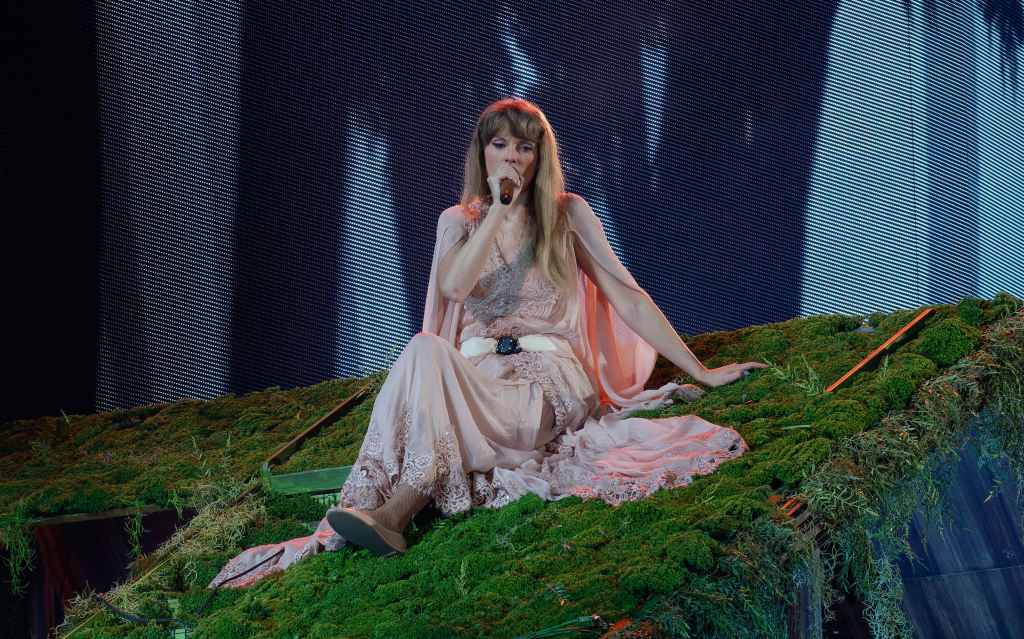
    Taylor Swift’s “The Eras Tour” was an unprecedented success worldwide. It had stops in 20 countries and multiple sold-out nights for each show. So how did she do it?

    Swift’s tour started in Glendale, Arizona, in March 2023 and ended in Vancouver, Canada, in December 2024. It grossed $1 billion, making it the highest-grossing tour of all time. The concert went through each “era” of Taylor Swift’s career, and she had a set with a few songs from each album that all fit the themes of her different albums. 

    Swift’s engagement with fans drove engagement and filled those seats! Through easter eggs, friendship bracelets, surprise songs, and more, she created a highly interactive experience. Each night of the tour, she would play a song that wasn’t on the set list and was considered a “surprise song.” Fans waited in anticipation, hoping they would get their favorite songs. 

    Fan Engagement is Key

    Photo Credits: Creative Commons

    Easter eggs are a huge part of Swift’s fan engagement and culture. She keeps her fans widely engaged through visual stage clues, cryptic social media posts, concert and event outfit clues, and sneak peeks such as her vault. 

    Easter egg clues were planted months in advance and came together full circle upon the release or once fans figured out the message. This fun, interactive method keeps fans engaged and excited for upcoming events. Clues for these were seen in social media posts, outfits, and stage designs. Only the most dedicated fans could decode the meaning behind these clues, which made the experience feel exclusive and rewarding.

    One of the most creative PR strategies was Swift’s interactive digital vault campaign to announce her newly recorded album, 1989. Fans would piece together clues to unlock the vault, which would slowly unlock as fans globally answered questions and completed the puzzle. A total of 33 million puzzles were solved. Once the vault was cracked open by fans, five new “from the vault” songs were released with the re-recording of the album 1989: Taylor’s Version. This cryptic puzzle involved fans, who started online conversations about the tour. 

    The media played an enormous part in engaging with Swift’s tour. Thousands of edits, videos, fan reactions, and theories circulated online, keeping the tour in news headlines for almost two years. 

    Swift’s fan engagement, easter egg clues, secret vaults, cryptic messages, and carefully crafted promotional tactics have led to the worldwide success of “The Eras Tour.”

    The Eras Tour Vault

    The Eras Tour Easter Eggs

  • NonProfits: A Platform for Artists

    NonProfits: A Platform for Artists

    Cover Photo From Creative Commons

    This week, we’re going to take a deep dive into a few nonprofits that are within the film industry. This is an exciting area to explore, as it drives competition in the ever-evolving film world. Specifically, we will look at the Sundance Institute and The Entertainment Industry Foundation. 

    Sundance 

    The Sundance Institute is a nonprofit organization with a mission that is dedicated to independent artists and audiences. Their organization has over 165 employees and grants over $3 million every year. Each year, Sundance Institute holds a film festival that showcases a collection of independent films. The film festival is centered around advancements for these independent artists. The festival spreads the word about artists and creators, as it has a diverse crowd of artists, directors, film producers, and more. 

    The festival will be held in Park City and Salt Lake City, Utah, for the annual 2026 showing. Excitingly, Sundance just revealed that their new home for the 2027 Sundance Music Festival will be in Boulder, Colorado. 

    The Sundance Institute does an incredible job at promoting the festival, as well as its mission, through social media. Their social media accounts are active and constantly updating eager participants of the festival application processes and deadlines. In 2023, the festival attracted over 86,000 people to its in-person film events. 

    Not only is the Sundance Film Festival an incredible platform for a nonprofit, but it is also efficient. It has become an esteemed event that hundreds of thousands of people have attended over the past several years. The film festival helps over 1000 emerging artists each year. 

    The film festival also brings incredible resources to where it is held, boosting tourism and attracting visitors from all over the country to attend. This money supports local businesses and foundations, as well as the money that The Sundance Institute receives. The film festival is an incredible way to provide incentives through nonprofit support to help emerging indie film artists reach mainstream media. 

    Sundance

    The Entertainment Industry Foundation

    For over 80 years, one of the most prominent nonprofit organizations in the entertainment world, the Entertainment Industry Foundation (EIF), has been paving the way to raise awareness and funds for health, social issues, and education. The EIF has over 50 employees and has raised over $1 billion to date. The EIF also supports over 200 charities each year and has donated more than $1 billion in advertising support. 

    The Entertainment Industry Foundation supports hundreds of different causes, including fiscally sponsored funds, EIF programs, and public service campaigns. Some of their campaigns utilize celebrities to gain awareness and become the face of the campaign. For example, Olivia Rodrigo has a campaign called “Olivia Rodrigo’s Fund 4 Good” that builds an equitable and just future for women and girls.

    The foundation is very active in promoting events and raising awareness through its social media, sharing upcoming events, fun facts, news updates, and donation opportunities. The opportunities to donate and campaigns that have been launched are always current and focus on the most pressing and timely issues. 

    These nonprofit organizations have a strong foothold in the entertainment industry and continue to revolutionize the field. While these are just two of the most popular nonprofits in the entertainment industry, there are many more to support!

    The Entertainment Industry Foundation

  • Rebrands and Collabs: A Look at Coachella and Stagecoach 2025

    Rebrands and Collabs: A Look at Coachella and Stagecoach 2025

    Cover Photo From Creative Commons

    Welcome back! With all the festival events happening over the last few weekends, it’s the perfect time to reflect on who performed at the festivals and what sets them apart from others. Specifically, in this post, we’ll be looking at two of the most popular music festivals of the year: Coachella and Stagecoach 2025.

    Coachella

    One of the most popular events of the year is the Coachella Valley Music and Arts Festival. The music festival attracts influencers from all over the world and features some of the most famous artists, bands, and creators. This year, artists such as Charli XCX, who leaned into mainstream media, Lady Gaga, who debuted an exciting rebrand, and Benson Boone, who surprised fans with an unexpected collaboration, gave performances of a lifetime.

    This year, Lady Gaga had a complete rebrand with the drop of her song “Abracadabra,” as well as the entire album Mayhem. It was an incredible way for her to debut her new era and build excitement about her upcoming tour. 

    Charli XCX also had a fantastic show. She brought out creators who were not performing at Coachella, such as Troye Sivan, Lorde, and Addison Rae. This type of publicity creates a unique anticipation that keeps fans eager to attend all her shows while also keeping her shows in the headlines. Charli XCX also ended a summer trend that started with her album, BRAT. The term, coined “Brat Summer,” may be officially over after Charli mentioned several other artists’ “summers” and said it may be time to make way.

    Another fan-favorite performance at Coachella was Benson Boone. Boone surprised fans with a performance of Bohemian Rhapsody with Brian May, a founding member of the band Queen. This is not only an incredible achievement but also a unique take to surprise fans with this cover. Not only did this collaboration shock fans, but Boone also performed a song that had not been released to the public yet and was not set to be released until a few days after Coachella ended. 

    Thousands of influencers attend Coachella and broadcast the experience, shows, and interactions across hundreds of platforms. From things such as “#bratsummer” trending across TikTok to people anticipating the drop of Benson Boone’s new song, Coachella 2025 was a year for collaborations, rebrands, and strategic branding. 

    Stagecoach

    Now let’s take a look at Stagecoach, which takes place a few weeks after Coachella, a country music festival. This year’s headliners were Zach Bryan, Jelly Roll, and Luke Combs, with featured performances from Lana Del Rey, Nelly, T-Pain, and so many other artists. 

    This year’s lineup of artists, including Lana Del Rey, Nelly, and T-Pain, introduced another side of Stagecoach that many fans aren’t familiar with. This cross-genre approach to Stagecoach brings in another set of fans who might go in hopes of seeing only their favorite artists, such as Lana Del Rey. Stagecoach embraced that a genre-specific festival can expand its reach and performances.  

    Music festivals make headlines in the media for months after they happen. They are the anticipation and talk of the year for influencers, artists, and fans. Coachella and Stagecoach are no exception!

    Charli XCX Set

    Stagecoach